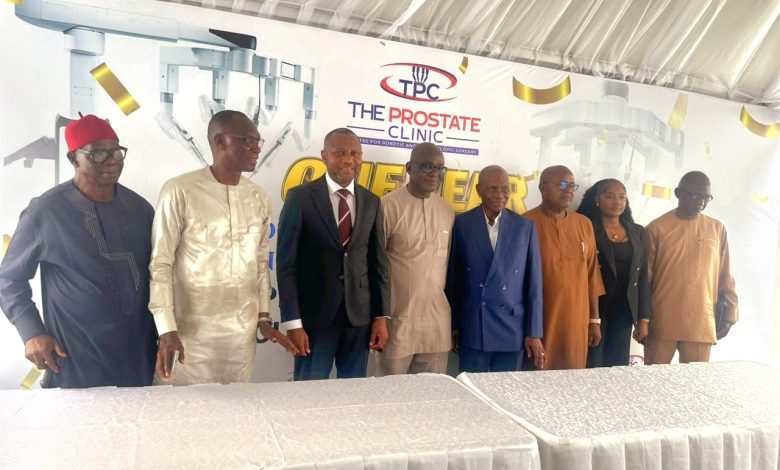
The Prostate Clinic (TPC) has marked its first anniversary with 100 successful robotic prostate cancer surgeries, highlighting a growing shift toward advanced cancer care within Nigeria.
Kingsley Ekwueme, consultant urological and robotic surgeon, who disclosed this at the anniversary event, over the weekend in Lagos, said the milestone reflects both increasing awareness and rising demand for specialised treatment.
“The number is important, but what matters most is that these surgeries were done safely. Every patient we treated went home,” he said.
Read also: Nigeria gets first AI-powered HIFU system for prostate cancer
Robotic-assisted surgery is considered a leading approach for prostate cancer treatment globally, offering greater precision and reduced risk of complications when compared to traditional methods. Its availability in Nigeria marks a significant step in reducing reliance on medical treatment abroad.
Nigeria continues to face a high burden of prostate cancer, with experts warning that more than 80 percent of patients are diagnosed at advanced stages when treatment options are limited. In contrast, only about 12.5 percent of cases in countries like the United Kingdom are detected late.
Ekwueme said closing this gap requires stronger awareness, early screening, and improved access to quality care. “Prostate cancer is curable if detected early. The problem is that most men come too late,” he stated.
In one year, TPC has treated patients not just from Nigeria but from Ghana, Cameroon, Côte d’Ivoire, Brazil, the United States, the UK, and Canada. Many undergo surgery and fly back home the next day.
Survivors of prostate cancer shared inspiring stories of healing and hope at the event. Many men who once faced death now live normal, active lives thanks to the clinic’s advanced robotic technology.
Eneche John Enenche (rtd), former Nigerian Army spokesperson, was among those who testified.
Enenche said he noticed changes in his body and his PSA level rose from 8.5 to 14.2. After confirmation at the African Medical Centre, he chose robotic surgery at TPC, describing the experience as divine intervention and expressed gratitude for his quick recovery and return to full health.
Adesina Alabi shared how his PSA level shot up to 7.9 last year. Frustrated by delays and poor service at another facility, a friend referred him to TPC. He underwent robotic surgery on December 27 and recovered smoothly. “This new place is excellent,” he said, praising the professionalism and care he received.
Other survivors who spoke at the event included Innocent Ihebuzor, Sylvester Ndie, and Ichie Osigwe. Patients from Ghana and Canada also sent video messages.
One Canadian patient, Emmanuel Okoli, said he abandoned treatment delays in Canada to fly to Lagos. “I would rather die in the hands of a human being,” he stated, happy with his successful outcome and fast recovery.
Read also: Imo revolutionises healthcare with robotic surgery centre
Patients testified that they experienced no complications, preserved sexual function, and no long-term incontinence, common fears that stop many men from seeking treatment in Nigeria
Ekwueme stressed that safety has been the clinic’s biggest achievement. “Every patient went home better than they came,” he declared.
Looking ahead, the clinic is expanding rapidly. A new dedicated robotic centre, the first in Nigeria and Africa, is set to open in Imo State. The facility will uniquely combine robotic surgery with a world-class oncology and radiotherapy centre under one roof.
Ekwueme also announced plans for research focused on African genetics to develop treatments that work best for Black patients.He urged Nigerian men, especially those over 45 or with a family history, to get regular PSA tests. “Prostate cancer is curable if you catch it early. You can live your normal life expectancy,” he said.
With 100 successful surgeries in its first year, The Prostate Clinic has proven that world-class prostate cancer care is possible in Nigeria. As more centres are planned across the country, many men now have reason to face the future with confidence.
“We have started the journey. Now we must expand it so more lives can be saved,” Ekwueme said.