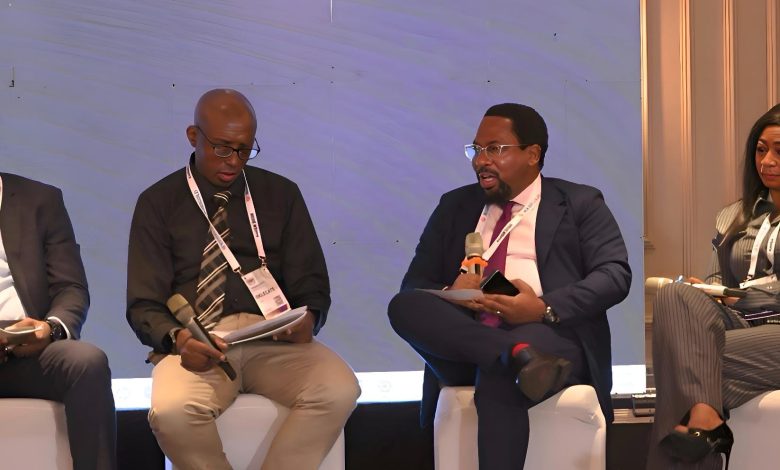
Nigeria’s health experts must adopt digital tools to scale healthcare and practices across the country, according to Soji Osunsedo, executive director and chief operating officer, R-Jolad.
Osunsedo made this call during a session focused on the role of technology in health education and healthcare delivery at the 2026 Medical Education Conference convened by the Association of Medical Schools in Africa (AMSA).
The discussion examined how digital innovation, including telemedicine, health data systems, and technology-enabled learning, is transforming how healthcare is taught, practised, and delivered across Africa.
Drawing from R-Jolad’s operational experience, Osunsedo highlighted the realities of implementing technology at scale within the Nigerian context, emphasising the importance of aligning healthcare delivery with digital transformation while also building the human capacity required to sustain it.
He noted that private healthcare providers must not only adopt technology but also actively shape how it is deployed across both education and patient care.
Read also: R-Jolad opens dialysis centre as kidney disease burden deepens in Nigeria
“Technology is not a supplement to healthcare; it is fast becoming its infrastructure. The question is no longer whether African healthcare systems will adopt it but whether we are building the human capacity to deploy it responsibly and at scale, and we are committed to being part of that answer,” he said.
The AMSA Medical Education Conference, organised in partnership with the World Federation for Medical Education, serves as a leading platform for driving reforms in medical education across Africa, fostering collaboration and innovation among key stakeholders working to strengthen the continent’s health systems.
The conference convened a diverse mix of medical educators, healthcare professionals, policymakers, and global health stakeholders, making it one of the continent’s most influential platforms for advancing medical education and workforce development.
Centred on the theme “Increasing Capacity and Retention of the Global Health Workforce”, the conference addressed some of Africa’s most pressing healthcare challenges, including the need to train, equip, and retain skilled health professionals to meet the demands of a rapidly growing population.
Discussions throughout the event explored how collaboration between governments, academic institutions, and private sector players can strengthen health systems, improve training pipelines, and ensure sustainable workforce retention across the continent.
Read also: R-Jolad acquires 100% of Princess Medical Centre in expansion push
R-Jolad, one of the sponsors, participated actively across the exhibitions and knowledge-sharing platforms, engaging with medical students, faculty members, and industry leaders while contributing practical insights drawn from its experience within Nigeria’s evolving healthcare landscape.
This contribution reflects the hospital’s broader commitment to delivering quality patient care and investing in the ecosystem that will define the future of healthcare delivery in Africa.
R-Jolad Hospital, established in 1982, is a 275-bed multispecialty healthcare institution with a hub-and-spoke service delivery system in 8 locations across Lagos & Port Harcourt.
The hospital provides a wide range of specialist medical services supported by modern diagnostic and treatment facilities. Key specialities include, Obstetrics & Gynaecology, Paediatrics, General Surgery, Internal Medicine, Family Medicine, Laboratory Services, Radiology, and Imaging, Emergency Care, and Preventive Health Services.
These services are supported by experienced consultants, nursing teams, and allied health professionals focused on quality outcomes, patient safety, and excellent patient experience.