Climate change is no longer just an environmental problem but a growing driver of insecurity, violent conflict, disease outbreaks and economic hardship in Nigeria, scientists have warned, urging governments at all levels to treat the climate crisis as a national security emergency rather than a purely ecological challenge.
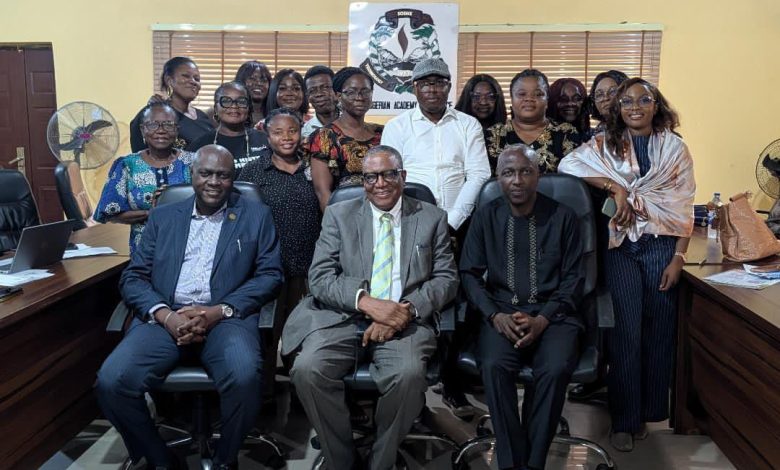
The warning came on Thursday at the Nigerian Academy of Science (NAS) Media Roundtable in Lagos, where environmental scientists and science communicators said rising temperatures, flooding, desertification and food insecurity are increasingly fuelling migration, farmer-herder clashes, violent extremism and criminal activities across Nigeria and the wider Sahel region.
Read also: NHIA enrolment hits 22m as health insurance coverage expands
Presenting a paper titled “Climate Change, Health, and the Nigerian Reality: Securing Our Climate Future for a Resilient Nigeria,” Babajide Alo, Fellow of the Nigerian Academy of Science, said climate change has evolved into one of the greatest threats facing the country because it now affects health, agriculture, livelihoods, economic growth and national security simultaneously.
Alo explained that prolonged droughts, shrinking grazing lands, declining agricultural productivity and worsening food insecurity are forcing populations to migrate in search of survival, creating fresh tensions between herders and farming communities while increasing the risks of organised crime and violent conflicts.
According to Alo, climate change has become a risk multiplier that amplifies existing social and economic challenges rather than creating entirely new ones.
“The region is dependent on rain-fed agriculture and is therefore prone to civil conflict and criminality following droughts and food scarcity,” he said, noting that the Boko Haram insurgency and recurring conflicts across the Sahel cannot be discussed without recognising the role environmental pressures play in worsening existing vulnerabilities.
He added that climate disasters also leave behind serious psychological scars, with displaced families and disaster victims increasingly suffering anxiety, depression and post-traumatic stress disorders.
Beyond insecurity, Alo warned that Nigeria remains poorly prepared institutionally to confront the climate crisis despite ambitious national commitments.
Although the Federal Government has introduced climate policies, Nationally Determined Contributions (NDCs), the Great Green Wall initiative and other environmental programmes, he said implementation remains heavily concentrated at the federal level while many states lack climate policies, action plans, dedicated budgets and institutional capacity.
“The impacts of climate change are mostly borne by states, yet climate governance at the subnational level remains weak,” he said.
Studies cited during the presentation showed that many state governments have limited climate awareness, weak policy frameworks and poor coordination with national climate programmes, gaps that threaten Nigeria’s ambition of achieving net-zero emissions by 2060.
To reverse the trend, Alo called for a shift from centrally designed interventions to community-led climate adaptation, arguing that local communities possess indigenous knowledge and practical experience needed to develop lasting solutions.
He said empowering communities through climate education, renewable energy, climate-smart agriculture, ecosystem restoration and direct access to climate finance would strengthen resilience while reducing competition over scarce natural resources.
He also highlighted Nigeria’s updated Nationally Determined Contribution (NDC 3.0), which targets a 29 percent reduction in greenhouse gas emissions by 2030 and 32.2 percent by 2035 relative to 2018 levels, alongside commitments to eliminate routine gas flaring, reduce methane emissions, curb deforestation, promote electric vehicles and establish 2,000 climate-resilient primary healthcare centres by 2030.
However, he noted that implementing the country’s climate roadmap will require an estimated $337 billion between 2026 and 2035, much of which depends on international financial support.
Complementing the scientific presentation, Wale Fatade, journalist and science communicator argued that climate change should now be reported primarily as a public health and development issue.
He noted that rising temperatures, flooding, worsening air pollution and changing rainfall patterns are expanding the spread of malaria, cholera and other infectious diseases while increasing heat-related illnesses, food insecurity and mental health challenges.
“The World Health Organization calls climate change the single biggest health threat facing humanity,” Fatade said, urging journalists to connect climate events directly with their consequences for people’s health, livelihoods and everyday lives.
He criticised event-driven reporting that focuses only on disasters after they occur, saying the media often fails to explain the scientific, health and policy dimensions of climate change.
Instead, he encouraged journalists to simplify scientific evidence, provide context for statistics, humanise climate stories and prioritise accuracy over sensationalism.
Speaking at the opening of the roundtable, Chinedum Babalola, public affairs secretary of the Nigerian Academy of Science, said science must move beyond laboratories and academic journals to shape public policy and national development.
Read also: Nigeria’s $5bn US health deal leaves private sector in the dark
She described journalists as the bridge between scientific evidence and public action, adding that climate change now directly affects Nigeria through flooding, disease outbreaks, food insecurity, heatwaves and worsening air quality.
Babalola said addressing the crisis requires stronger collaboration among scientists, policymakers, journalists, businesses and communities, while aligning Nigeria’s climate response with the Sustainable Development Goals and Environmental, Social and Governance (ESG) principles.
The roundtable concluded that climate change is no longer a future environmental concern but a present national challenge that cuts across security, health, agriculture and economic development.
Participants urged governments to strengthen state-level climate governance, invest in grassroots resilience and treat climate action as an urgent national priority before worsening environmental pressures further deepen Nigeria’s security and humanitarian challenges.