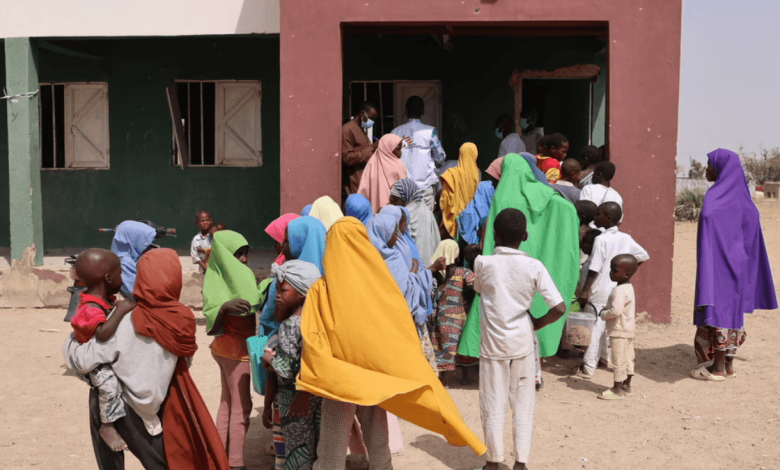
Nigeria’s prolonged diphtheria outbreak is increasingly becoming an economic burden, with Kano State alone recording more than 32,000 confirmed cases and over 1,800 deaths since the resurgence began in December 2022.
Beyond the human toll, the outbreak is costing governments, households and development partners millions of dollars through emergency response, hospitalisation, medicines, vaccination campaigns, disease surveillance, laboratory testing and loss of productivity.
The economic consequences are particularly severe in northern Nigeria, where household incomes are heavily dependent on farming, informal businesses and daily labour, making prolonged illness capable of wiping out income while simultaneously increasing medical expenses.
Mohammed Adamu Abbas, director-general of the Kano State Centre for Disease Control (KNCDC), disclosed the latest figures while briefing journalists at the weekend on the state’s disease surveillance and outbreak response system.
The KNCDC said more than 39,000 suspected cases had been investigated in Kano since the outbreak began, with laboratory, clinical and epidemiological assessments subsequently confirming more than 32,000 cases.
The Kano figures form part of a wider national outbreak that has spread across several states, particularly in northern Nigeria. More than 10,000 confirmed cases have been recorded nationally in 2026 alone, according to Nigeria Centre for Disease Control and Prevention data.
Apart from Kano, significant outbreaks have affected Borno, Bauchi, Katsina and Yobe in the North, while cases have also been reported in states including Lagos and Osun in the South-West.
The geographical spread underscores the national character of the crisis, although Kano remains by far the most heavily affected state.
At the height of the outbreak, Kano accounted for more than 85 percent of Nigeria’s reported diphtheria burden, according to the KNCDC.
The state’s share has since declined as transmission has expanded elsewhere and control measures have been intensified, but the persistence of cases nearly four years after the resurgence began points to a deeper problem than an isolated outbreak.
Read also: Nigeria nears $1bn monthly remittance target as July inflows hit $947m – CBN
It exposes weaknesses in Nigeria’s routine immunisation system and the difficulty of reaching children who have never received basic childhood vaccines.
The cost of a preventable disease
Diphtheria is a vaccine-preventable disease, meaning much of the financial burden generated by repeated outbreaks could potentially be avoided through stronger routine immunisation.
The costs begin with emergency disease detection.
Once an outbreak is suspected, governments have to mobilise epidemiologists, surveillance officers, laboratory personnel, clinicians and community health workers. They must transport samples, establish isolation and treatment centres, conduct contact tracing, deploy vaccines and intensify public-health communication.
International agencies have also had to divert significant resources towards Nigeria’s outbreak response.
UNICEF previously estimated that about $3.3 million was urgently required during peak periods of transmission, while the World Health Organisation deployed more than $1.3 million for active surveillance, laboratory testing and case management.
For households, however, the cost is more immediate.
Families caring for children with diphtheria may face transportation costs, food expenses, loss of income and other costs associated with prolonged hospitalisation. Parents who operate farms, petty businesses or rely on daily wages may lose income because they have to remain with sick children.
The wider economy consequently loses productive hours while public resources are redirected from other healthcare priorities to outbreak management.
In states such as Kano, Borno, Bauchi, Katsina and Yobe, where poverty and healthcare-access challenges are already significant, the financial effect of an infectious disease outbreak can extend beyond individual families to entire communities.
Kano’s zero-dose crisis
The most revealing element of Kano’s data is the vaccination history of affected children.
More than 16,000 of the confirmed cases recorded in the state involved children who had never received any vaccination.
More than 9,000 confirmed patients were fully vaccinated, while the remaining cases involved people who were either partially vaccinated or whose vaccination status could not be reliably established.
The concentration of cases among zero-dose children provides evidence of a major structural weakness in the state’s primary healthcare and routine immunisation system.
A child who has never received a vaccine represents not only an individual vulnerability but also a potential point through which transmission can continue within a community.
The problem is not confined to Kano.
The recurrence of outbreaks across northern states demonstrates that immunity gaps are a wider regional challenge. In communities where routine immunisation coverage is low, vaccine-preventable diseases can return even after periods of relative control.
A 2023 review published in Immunity, Inflammation and Disease identified poor diphtheria vaccination coverage as the principal driver of recurrent outbreaks in Nigeria.
The review linked low coverage to inadequate vaccine supply, inefficient cold-chain systems, poor health literacy and negative sociocultural and religious beliefs.
These problems mean that simply supplying vaccines is not enough. Vaccines must reach communities, remain potent through an effective cold chain and be accepted by parents and caregivers.
Antitoxin shortage worsens mortality
The vaccination gap is only one side of Nigeria’s diphtheria problem.
Once a person contracts the disease, access to diphtheria antitoxin (DAT) becomes critical in preventing severe complications.
Nigeria has historically struggled with the availability of DAT, creating another major weakness in the outbreak response chain.
The 2023 review found that inadequate production of DAT was associated with low demand and high production costs, leaving countries vulnerable when outbreaks suddenly increase demand.
This creates a difficult economic equation.
Governments need to maintain access to an expensive specialised treatment that may not be used in large quantities during periods of low transmission, yet failure to stock sufficient supplies can have serious consequences when an outbreak occurs.
For Nigeria, the result is a cycle of emergency procurement, international assistance and logistical challenges precisely when patients require rapid treatment.
Late presentation adds to the burden
The problem is further compounded by delays in seeking treatment.
In Rano Local Government Area of Kano State, 91 percent of the 32 diphtheria patients recorded between January and August 26, 2026, reportedly arrived late for treatment.
Mohammed Adamu Abbas said 94 percent of those affected in Rano had never received any form of vaccination.
Of the 32 cases recorded, seven complicated cases were referred to an isolation centre, while 25 were treated at the local diphtheria treatment centre. Two deaths were recorded.
The data contradicted reports that more than 50 children had died from diphtheria in Rano.
Rather than simply dismissing the allegation, however, the KNCDC initiated active case searches in communities and health facilities.
The investigation demonstrates the importance of reliable surveillance in determining the actual scale of disease outbreaks.
Beyond Kano: a national challenge
While Kano remains the epicentre, the outbreak has affected a widening group of states.
Borno, which has previously experienced serious diphtheria outbreaks, remains vulnerable because of displacement, disrupted healthcare services and difficulties reaching some communities.
Bauchi and Katsina have also recorded significant cases, while Yobe has featured among states affected by the current resurgence.
In the South-West, Lagos and Osun have also recorded cases, demonstrating that the disease is not exclusively a northern Nigerian problem.
The difference is that northern states generally face a combination of larger immunity gaps, difficult terrain, poverty, insecurity in some communities and weaker access to healthcare, all of which make outbreak control more complicated and expensive.
Read also: East Africans top 2nd Enugu City Int’l Marathon
The spread across geopolitical zones also means that Nigeria cannot treat diphtheria as a localised Kano problem.
A national strategy must address routine immunisation gaps across both northern and southern states while giving additional support to areas carrying disproportionate burdens.
Surveillance as an economic defence
For Mohammed Adamu Abbas, surveillance is more than a mechanism for compiling disease statistics.
It is an early-warning system capable of limiting the eventual human and financial cost of an outbreak.
Kano operates passive, active and event-based surveillance systems.
Passive surveillance depends on reports from healthcare facilities and disease surveillance officers, while active surveillance involves health officials physically visiting communities and facilities to search for cases that may not have been reported.
The state also maintains a rumour log through which unverified reports are documented and investigated.
“If people don’t know, they won’t know how to protect themselves,” Mohammed Adamu Abbas said.
The approach became particularly important after reports emerged alleging mass deaths from diphtheria in Rano.
Instead of relying on social media claims or political statements, health officials conducted field investigations to determine the actual situation.
Such systems can reduce the economic cost of outbreaks by enabling governments to identify transmission earlier and deploy resources more efficiently.
Bringing treatment closer to communities
Kano has also decentralised treatment as part of its response.
Previously, patients from distant communities often had to travel to Kano metropolis for specialised diphtheria care. For poor families, the journey could involve expensive transportation and long delays.
The state has subsequently expanded treatment services to locations including Rano, Bichi and Wudil, alongside other secondary and primary healthcare facilities.
The KNCDC said it now has 26 treatment points — 13 secondary healthcare facilities and 13 primary healthcare facilities.
Decentralising services reduces the distance patients must travel and may help address one of the most expensive components of outbreak management: delayed treatment.
Traditional practices complicate response
Health authorities have also identified traditional treatment practices as a factor contributing to delayed hospital presentation.
Mohammed Adamu Abbas said officials had encountered cases in which affected children were taken to traditional barbers or healers to remove the membrane associated with diphtheria.
Rather than simply condemning the practice, the KNCDC has engaged traditional practitioners and barbers, encouraging them to identify suspected cases and refer patients to health facilities.
“We are not against your services, but know your own limits. Because we know our limits too,” he said.
The strategy recognises that traditional practitioners remain influential in many communities and can therefore become an important part of early disease detection rather than being excluded from the response system.
Immunisation remains the biggest constraint
Despite improvements in surveillance, treatment capacity and outbreak response, Nigeria’s biggest obstacle to permanently controlling diphtheria remains its immunisation gap.
Treatment centres can manage patients, surveillance officers can identify outbreaks and development partners can provide emergency funding, but none of these measures can replace the protection provided by vaccination.
Kano’s more than 16,000 zero-dose cases illustrate the scale of the problem.
The challenge therefore requires more than periodic emergency vaccination campaigns.
Nigeria needs sustained investment in routine immunisation, reliable vaccine supply, functional cold-chain infrastructure, stronger primary healthcare facilities and continuous community mobilisation.
It also needs a stronger strategy for addressing misinformation and sociocultural concerns surrounding vaccination.
For states such as Kano, Borno, Bauchi, Katsina and Yobe, the priority is particularly urgent because repeated outbreaks consume scarce public resources that could otherwise be invested in preventive healthcare, maternal services, nutrition and other development priorities.
The economic lesson from Nigeria’s diphtheria crisis is increasingly clear: prevention is cheaper than repeated emergency response.
Every unvaccinated child represents a potential health risk, but also a potential future cost to the household, health system and economy.
Kano’s experience, therefore, offers a warning for the rest of Nigeria. The country may continue spending millions of dollars responding to outbreaks, or it can invest more systematically in routine immunisation and primary healthcare systems capable of preventing those outbreaks from becoming national economic burdens in the first place.