Nigeria records new cancer treatment milestone with actinium therapy at Loveworld Medical Centre

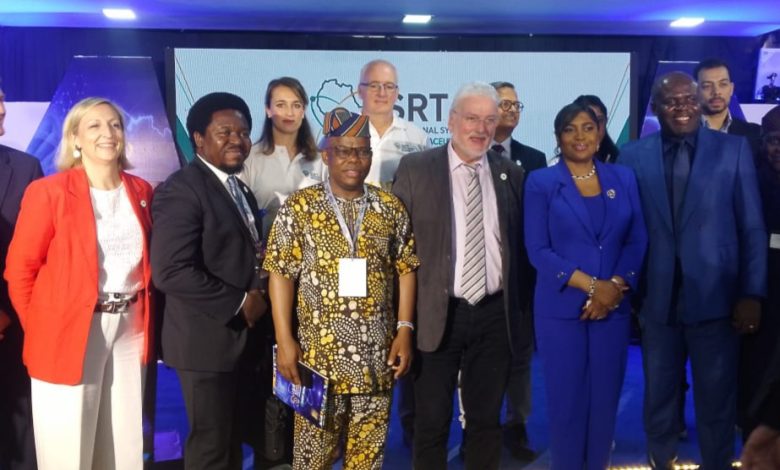
Nigeria has recorded a new milestone in advanced cancer treatment with the deployment of Actinium-based radiopharmaceutical therapy at Loveworld Medical Centre (LMC), Lagos, as specialists push precision oncology as a targeted alternative to conventional cancer treatment.
The development was disclosed at the 2026 International Symposium on Radiopharmaceutical Therapy (ISRT), themed “Advancing Radiotheranostics and Precision Oncology in Africa,” held at the medical centre on Friday.
Iziaq Adekunle Salako, minister of State for Health and Social Welfare, said Nigeria’s response to cancer must go beyond improving access to conventional treatment to include research, innovation, skilled manpower, infrastructure and effective regulation.
Read also: Waiting for an African agricultural revolution: Africa’s farmers are not the problem. The system around them is
Salako, who was represented by David Oladele, deputy director of Research, Nigeria Institute of Medical Research (NIMR), Yaba, at the symposium, posited that, radiopharmaceutical therapy represents an important frontier in modern medicine, adding that Nigeria needed to develop local capacity and establish partnerships that could translate scientific discoveries into accessible healthcare.
He urged Nigerian and international institutions to deepen collaboration, pursue technology transfer and build the workforce needed to make advanced cancer treatment more accessible.
Adeola Philips, executive minister, ministry of healing, healthcare and medical services and chairman, Loveworld Medical Centre, said the centre had deliberately positioned the symposium as a platform for building African expertise.
Philips disclosed that more than 120 participants registered for the 2026 symposium, with participation offered free of charge to remove barriers to knowledge and specialist training.
Philips averred the centre’s ambition was to ensure that sophisticated cancer diagnosis and targeted treatment could be developed and delivered in Africa to international standards.
“Africa should not only receive advice in medicine after they have been established elsewhere. We can learn them, implement them, improve them, and establish others,” she said.
Masha Maharaj, director of operations, Loveworld Medical Centre and president-elect of the World Association of Radiopharmaceutical and Molecular Therapy (WARMTH), disclosed that the centre had conducted Actinium treatment on several patients, including those with breast cancer, sarcoma and lung cancer.
What is actinium therapy?
Actinium-225, commonly known as Ac-225, is a radioactive isotope used in a form of precision cancer treatment called targeted alpha-particle therapy.
The treatment works by attaching Actinium-225 to a molecule designed to recognise a specific biological marker on cancer cells. Once administered, the compound travels to the tumour and releases powerful alpha particles over a very short distance, destroying targeted cancer cells while limiting damage to surrounding healthy tissue.
This is the principle behind radiotheranostics — combining diagnosis and treatment by first identifying a tumour’s biological target and then using a corresponding radiopharmaceutical to attack it.
Maharaj described the concept simply as,, “What we see, we can treat.”
Unlike conventional chemotherapy, which can attack both cancerous and healthy rapidly dividing cells and cause effects such as hair loss, nausea and bone-marrow suppression, targeted radiopharmaceutical therapy is designed to concentrate its destructive effect around tumour cells.
Actinium-225 is particularly being investigated for advanced prostate cancer, especially tumours expressing prostate-specific membrane antigen (PSMA), as well as neuroendocrine tumours and some blood cancers. It is not, however, a universal cure for cancer; its effectiveness depends on whether a patient’s tumour carries the biological target required for the specific treatment.
Maharaj said Loveworld Medical Centre’s broader radiopharmaceutical programme has treated prostate, breast, colorectal, sarcoma and lung cancers, while the centre also has labelling capability for pancreatic cancer.
She said the technology could improve outcomes even in advanced disease, citing research she conducted with Richard Baum, a pioneer in nuclear medicine, molecular biology and precision oncology.
According to Maharaj, patients with advanced prostate cancer treated using radiotheranostics recorded significant improvements, with some moving from advanced disease into a potentially curative state.
Emeka Eze, chief medical director, Loveworld Medical Centre, described precision oncology as the future of cancer treatment, saying wider adoption could eventually make the technology more affordable.
He said targeted radionuclide treatment offered an important advantage because the radioactive materials are designed to attack diseased cells rather than indiscriminately targeting rapidly dividing cells.
Read also: Group targets 80% appropriate cancer treatment in Nigeria by 2030
Eze said Loveworld Medical Centre currently has nuclear medicine infrastructure, including a gamma camera, supporting advanced cancer diagnosis and treatment.
He also said foundations supporting the centre were helping some patients access the otherwise expensive treatment free of charge.
The development at Loveworld Medical Centre signals a growing shift in Nigeria’s cancer-care landscape: from broad systemic treatment towards molecularly targeted therapy, where patients are first assessed to determine the biological characteristics of their tumours before receiving a corresponding treatment.
However, specialists say expanding the technology nationally will require sustained investment in radiopharmaceutical supply, nuclear medicine infrastructure, specialist training, regulation and financing to ensure that precision cancer care moves beyond a handful of specialised centres and becomes accessible to more Nigerians.