Daud Olatunji
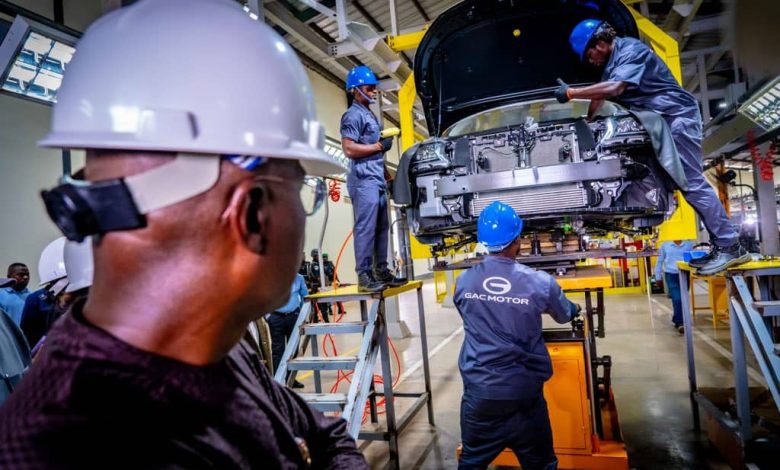
The Federal Government has directed all ministries, departments and agencies (MDAs) to purchase vehicles exclusively from licensed local assemblers or their authorised retailers, warning that any violation will attract sanctions, including blacklisting and revocation of operating licences.
The directive, announced on Friday in Abuja, is part of the government’s efforts to boost local manufacturing, create jobs, reduce dependence on imports and strengthen Nigeria’s automotive industry under its “Nigeria First” policy.
The Director-General of the National Automotive Design and Development Council (NADDC), Oluwemimo Osanipin, disclosed the decision during a joint press briefing with the Director-General of the Bureau of Public Procurement (BPP), Adebowale Adedokun.
Osanipin said the policy covered all vehicles procured by federal government institutions, including utility vehicles acquired for specific projects.
“We are fundamentally shifting the Nigeria First Policy. All vehicles procured by ministries, departments and agencies, including project utility vehicles, must be sourced exclusively from licensed local assemblers or their authorised retailers,” he said.
The NADDC chief said any government agency seeking to purchase a foreign-assembled vehicle must establish that no suitable locally assembled alternative was available and obtain direct presidential approval.
He added that all vehicles supplied to the government must have traceable Vehicle Identification Numbers (VINs), which would be verified through the council to ensure compliance.
“Any supply outside licensed local assembly lines will attract immediate regulatory sanctions, including blacklisting and licence revocation,” Osanipin warned.
The directive signals a tougher enforcement approach to local-content requirements in public procurement, with government agencies expected to prioritise domestically assembled vehicles over imported alternatives.
Osanipin said Nigeria’s vehicle assembly plants had a combined annual production capacity of 370,520 vehicles, arguing that increased government patronage could help local manufacturers expand production and strengthen the domestic automotive value chain.
He, however, challenged assemblers to move beyond producing expensive vehicles for high-income consumers and develop more affordable models for the wider population.
“There are vehicles that are for high-end people; continue to produce them, but let’s take advantage of the over 250 million Nigerians who need mobility at a very reasonable cost,” he said.
The NADDC director-general also urged manufacturers to increase local production of spare parts, describing the component manufacturing sector as a major potential beneficiary of the policy.
According to him, spending on spare parts represents a significant market opportunity that could support domestic businesses beyond the initial purchase of vehicles.
“The major beneficiary of the policy will be the local content manufacturers. We spend more on spare parts than even procurement of vehicles,” he said.
He added that greater government patronage of locally assembled vehicles would create sustained business opportunities for Nigerian companies involved in repairs, maintenance and servicing throughout the vehicles’ operational lifespan.
The BPP director-general, Adedokun, said the Federal Executive Council had designated the bureau to establish procurement standards across sectors and provide the institutional framework for implementing the Nigeria First policy.
He said the bureau had consulted local vehicle assemblers and other industry stakeholders to identify challenges confronting the sector, particularly concerns about whether Nigerian manufacturers would receive sufficient patronage from the government.
Adedokun said the consultations revealed that the availability of a dependable market was one of the industry’s major concerns, including among manufacturers of automotive components.