Nigeria and other African economies face mounting trade uncertainties as escalating geopolitical tensions, particularly conflicts in the Middle East and Ukraine, threaten to reshape global trade flows, disrupt supply chains and increase pressure on international commerce.
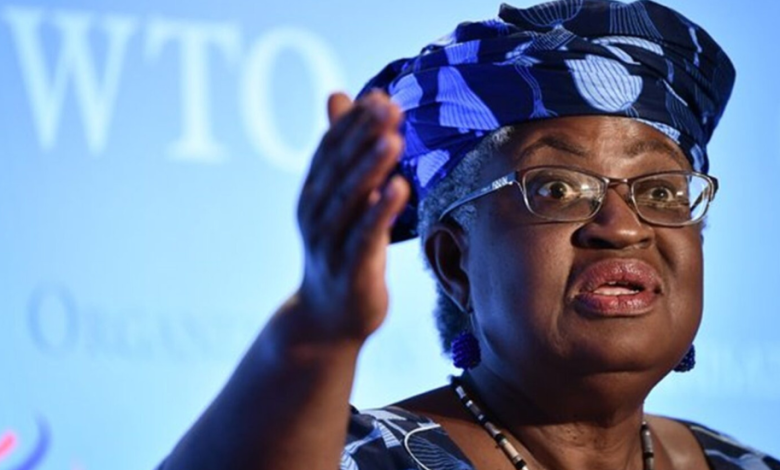
Director-General of the World Trade Organization (WTO), Ngozi Okonjo-Iweala, warned that the effects of the conflicts could persist even after hostilities ease, as businesses increasingly diversify their supply chains and seek alternative trade routes to reduce their exposure to future disruptions.
Speaking to Reuters on Thursday during an interview in Bangkok,
Okonjo-Iweala said geopolitical instability was changing the way companies conduct international business, with some adjustments likely to become permanent.
Although Nigeria was not specifically mentioned in her remarks, the potential consequences of these developments are relevant to Africa’s largest economies, including Nigeria, where international trade, energy markets and access to global supply chains remain important to economic performance.
The WTO chief said trade in the Middle East had contracted sharply following the war involving Iran, with the organisation projecting a 17 per cent decline in the region’s exports this year and an approximately 15 per cent fall in imports.
She noted that trade flows could take time to recover, even if the conflict subsides and shipping through the Strait of Hormuz returns to normal, as companies increasingly prioritise supply-chain diversification and contingency planning.
According to her, geopolitical considerations have made it commercially sensible for businesses to maintain alternative suppliers and routes rather than rely exclusively on established trade corridors.
These adjustments could have wider implications for African countries, particularly those exposed to fluctuations in global commodity prices, shipping costs, energy markets and demand from major trading partners.
For Nigeria, prolonged disruption to international trade routes could affect the cost and availability of imported goods, industrial inputs and other essential commodities. Higher freight and insurance costs could also place additional pressure on businesses that depend on imported machinery, raw materials and intermediate goods.
Changes in global supply chains could, however, create opportunities for Nigerian exporters and manufacturers if the country can improve its export competitiveness, strengthen domestic production and attract investment into sectors capable of supplying regional and international markets.
Okonjo-Iweala also highlighted the potential for African countries to expand trade among themselves, arguing that stronger regional commerce could support economic growth, create jobs and generate additional value across the continent.
She said intra-African trade currently accounts for approximately 20 per cent of Africa’s total trade, compared with about 60 per cent for trade within the European Union.
The disparity underscores the scope for African economies to deepen commercial ties, expand regional supply chains and reduce excessive dependence on markets outside the continent.
For Nigeria, greater regional integration could provide opportunities to increase exports of manufactured goods, agricultural products, processed commodities and services to neighbouring countries and other African markets.
However, translating this potential into stronger trade performance would require improvements in transport infrastructure, customs procedures, border administration, trade financing and the implementation of regional trade agreements.
Businesses would also need more reliable electricity, competitive production costs and improved access to foreign exchange to strengthen their ability to compete with suppliers from other regions.
The WTO chief said regional trade agreements were expected to continue advancing even as the multilateral trading system remained important to international commerce.
Trade conducted under WTO rules still accounts for nearly three-quarters of global trade, she noted, highlighting the continued significance of multilateral arrangements despite growing geopolitical divisions and the increasing use of regional trade partnerships.
Meanwhile, the WTO has raised its forecast for global merchandise trade volume growth in 2026 to 3.9 per cent, from its previous baseline projection of 1.9 per cent issued in March.
The improved outlook reflects stronger-than-expected trade performance and increased demand for artificial intelligence-related products, which have helped offset some of the negative effects of the Middle East conflict.
Okonjo-Iweala, however, cautioned that the positive outlook could obscure underlying weaknesses in global trade, particularly as geopolitical conflicts, tariff uncertainty and concerns about the sustainability of the artificial intelligence investment boom continue to cloud the outlook.
She warned that the impact of artificial intelligence was masking other developments in trade that were less favourable.
The revised forecast therefore presents a mixed picture for countries such as Nigeria and other African economies, which must navigate the risks posed by geopolitical tensions while positioning themselves to benefit from changing patterns of global demand.
For African policymakers, the developments reinforce the need to strengthen regional markets, diversify export destinations and improve the resilience of domestic supply chains.
Greater intra-African trade could also help businesses reduce their dependence on distant markets and establish more reliable sources of demand when international shipping routes or major trading relationships come under pressure.
For Nigeria, the challenge will be to convert these changes in global commerce into stronger non-oil exports, greater industrial activity and more diversified sources of trade revenue, while limiting the effects of external shocks on domestic businesses and consumers.