Oyedele, Cardoso Meet Banga As Nigeria Seeks More Investment, Stronger Growth At IMF

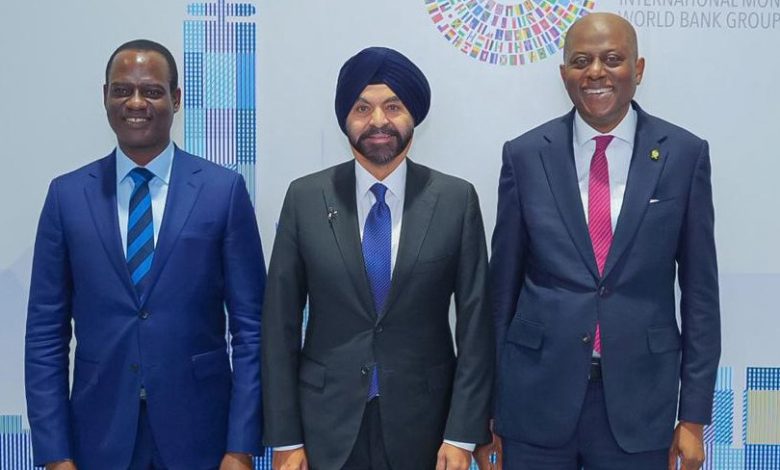
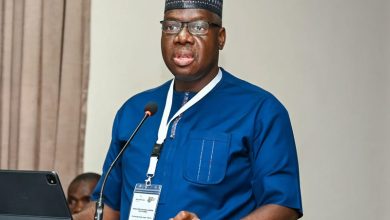
The Minister of Finance and Coordinating Minister of the Economy, Mr. Taiwo Oyedele, and the Governor of the Central Bank of Nigeria (CBN), Olayemi Cardoso, on Monday met with the President of the World Bank Group, Ajay Banga, on the sidelines of the ongoing annual meetings of the International Monetary Fund (IMF) and the World Bank in Bangkok, Thailand.
This comes as the World Bank Group identified artificial intelligence (AI) applications in agriculture, healthcare, manufacturing, tourism and infrastructure as key to creating jobs and boosting productivity in Nigeria and other African economies, urging governments to prioritise practical uses of the technology that address local economic challenges.
In the meeting with Banga, Oyedele who leads Nigeria’s delegation to the week-long meetings and Cardoso met with the World Bank chief to review the progress of Nigeria’s policy reforms, and the next phase of its agenda–turning macroeconomic stability into faster growth, more private investment and stronger domestic revenues.
In a statement issued by its Head, Media, Efe Ovuakporie the Ministry of Finance said Banga commended the progress of Nigeria’s reforms, pointing to the rise in private capital inflows from about $300 million in 2023 to nearly $6 billion in 2026, representing a “twentyfold increase.”
Oyedele highlighted the rising economic growth and noted that Nigeria’s tax-to-GDP ratio rose from about seven per cent to 12.5 per cent over the same period, adding that this gives the government more room to fund public investment without resorting to deficit monetisation.
The meeting discussed how Nigeria could make greater use of World Bank guarantee instruments, guarantees which could unlock financing for infrastructure and draw more private capital into the domestic market.
“Power infrastructure and human capital were identified as priorities for continued public investment, given their importance to business competitiveness, productivity and job creation. The meeting also stressed the quality of public spending, so that each naira delivers measurable economic and social returns.
“The meeting is part of the Federal Government’s wider engagement with development partners to lock in reform gains and attract new investment. As Nigeria moves from stability to growth, the priority is to turn stronger fundamentals into productive investment, more jobs and better living standards for Nigerians,” the statement said.
World Bank: AI Can Boost Jobs, Productivity in Nigeria, Other African Countries
Meanwhile, the World Bank Group has identified AI applications in agriculture, healthcare, manufacturing, tourism and infrastructure as key to creating jobs and boosting productivity in Nigeria and other African economies, urging governments to prioritise practical uses of the technology that address local economic challenges.
Banga, said the institution was placing job creation at the centre of its development agenda, with particular emphasis on deploying smaller, practical AI applications to strengthen businesses, improve access to essential services and expand economic opportunities for young people.
Speaking at the World Bank’s flagship event, ‘Small AI: More and Better Jobs,’ at the ongoing IMF and World Bank Group Annual Meetings in Bangkok, Thailand, Banga said developing economies could harness AI to improve productivity in sectors that already support millions of livelihoods.
He identified infrastructure, agriculture, primary healthcare, tourism and manufacturing as five priority sectors with significant potential to generate employment, particularly in economies where small businesses and informal economic activities account for a substantial proportion of livelihoods.
Banga said the scale of the demographic challenge confronting developing economies made employment creation an urgent priority for governments and development institutions.
“I believe that the bank’s entire focus has to be on jobs for a very simple reason: 1.2 billion young people in the coming 15 years are going to become 18 years of age, so that could be a huge demographic dividend,” he said.
He explained that the objective was to ensure that young people could participate productively in society through formal employment, entrepreneurship and other economic activities.
“So, the word job does not mean working for a big company or a small company or as an entrepreneur. It’s being productive in society, having a sense of optimism and a sense of dignity that comes from earning and being a part of that system. That’s what we’re talking about,” Banga said.
According to him, investments in infrastructure, education, healthcare and skills development must be designed with employment outcomes in mind, while governments should establish the conditions necessary for private businesses to invest, expand and create jobs.