The withdrawal and reduction of US foreign assistance programmes, including USAID-backed healthcare funding, is forcing African health stakeholders to look towards domestic institutional capital, with pension funds managing more than $5 billion emerging as a potential source of long-term financing.
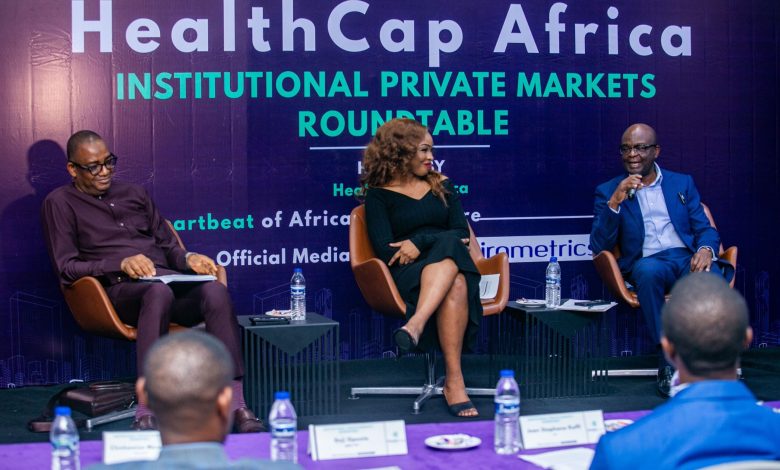
The shift was a key outcome of HealthCap Africa’s Private Markets & Healthcare Roundtable held in Lagos, where pension fund managers, regulators, development finance institutions and healthcare investors examined how Africa can build a more sustainable financing model for the sector.
The roundtable, themed “Healthcare as an Asset Class”, comes as Africa faces a widening mismatch between its healthcare needs and available financing. The continent accounts for 22 percent of the world’s disease burden but receives only one percent of global health spending, leaving an estimated $1.1 trillion annual health financing gap.
Read also: Army wants vigilantes to share timely intelligence on security threats
Participants argued that the decline in international donor funding makes it increasingly important to mobilise capital already available within African economies, particularly pension assets, insurance funds, family capital and private investment.
Pension fund representatives at the meeting came from institutions collectively managing more than $5 billion in assets under management, placing institutional investors at the centre of discussions about how healthcare can become an investable asset class rather than remain heavily dependent on aid and philanthropy.
Deji Alli, founder and chairman of ARM, chaired the meeting, while Abu Jimoh, founder and group CEO of TrustBanc Financial Group, co-chaired it. Senior representatives from the Securities and Exchange Commission, National Pension Commission, Africa Finance Corporation, International Finance Corporation and World Bank also participated.
The central challenge, however, is not simply the availability of money but the development of investment structures capable of matching pension funds’ fiduciary obligations with healthcare’s financing needs.
HealthCap Africa said the Securities and Exchange Commission, PenCom, fund managers and institutional investors need to work together to create investment products that can meet fiduciary standards while generating institutional-grade returns.
The Africa Finance Corporation has also offered to share the structure behind its new $100 million venture capital fund, which has already been deployed into two underlying funds, as a possible model for pension investors seeking to diversify risk through fund-of-funds structures.
The approach could help address one of the major barriers to institutional investment in healthcare: the mismatch between the risk profile of early-stage healthcare businesses and the investment requirements of large pools of retirement savings.
Mories Atoki, CEO of ABC Health, said the industry needs more early-stage investors and better matching between projects and sources of capital.
“There needs to be more early-stage investors,. There is no such thing as an unbankable project. There’s only such a thing as a risk-investor match,” Atoki said.
She said investors need to be matched with businesses according to their stage of development, while more investment in the early-stage ecosystem is required to create companies capable of attracting growth capital later.
The roundtable also highlighted the role of government in creating the conditions needed for private capital to participate.
Chishamiso Mawoyo of the World Bank said government policy remains important in creating an environment in which private investment can work, while participants stressed the need for stronger links between private and public markets.
Ola Brown, founder and general partner of HealthCap Africa, pointed to India’s healthcare investment experience as an illustration of what sustained private capital can achieve.
Quadria Capital, a healthcare-focused investment platform in India, has raised more than $1 billion and has assets under management of more than $4 billion, according to Brown. She said the experience offered Africa a useful example of how specialised pools of capital could support healthcare development.
“The opportunity here for Africa is not necessarily to replicate India’s model, but to consider what similar pools of specialised capital could achieve for African healthcare,” Brown said.
Private capital is already financing healthcare infrastructure in Nigeria. Humphrey Oriakhi of PAC Capital highlighted the firm’s financing of a 250-bed multi-specialty tertiary hospital in Gateway, Abeokuta, built entirely with private capital.
HealthCap Africa said its own pilot fund has created more than 1,000 jobs across 10 African countries and reached more than two million patients.
Nigeria also has an existing private-market pipeline that could support the development of healthcare investment. Between 2021 and 2025, the country recorded 513 Seed+ deals, accounting for more than a quarter of Africa’s early-stage activity, while about six of Africa’s eight unicorns are Nigerian.
Participants said the next step is to deepen local capital pools around sectors with large unmet demand, with healthcare identified as a major opportunity.
Deji Alli, founder and chairman of ARM, also pointed to innovation as a means of addressing market and regulatory constraints, saying, “Innovation can overcome regulation.”
Read also: FG expanding poverty reduction strategy across the country – Presidency
The roundtable’s recommendations point to a potential restructuring of how African healthcare is financed. Rather than replacing donor funding with another single source, stakeholders are advocating a broader model combining government, philanthropy, development finance and private capital.
For pension funds, the opportunity will depend on whether regulators and fund managers can turn interest in healthcare into transparent, well-governed products that offer appropriate risk-adjusted returns. For healthcare businesses, the challenge will be building an investment pipeline capable of moving companies from early-stage private capital to growth funding and, eventually, public markets.
The retreat of foreign assistance has therefore exposed a deeper financing problem, but it has also intensified the push to unlock Africa’s own pools of long-term capital for one of its most critical sectors.